
Feeding Rome
During the 3000 year rule of the pharaohs, activity in the northeastern part of the Fayum was limited. During the rule of the first two Ptolemies, the successors of Alexander the Great who came into power in the third century BC, the Fayum was systematically developed. A ring of villages was built in the desert around the fertile basin to provide new agricultural land for Greek veterans. The Fayum was developed at a rapid pace by Greek landowners and Egyptian farmers.
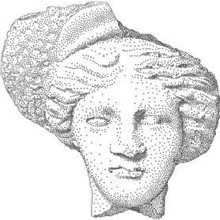
Wheat and olives were the most important crops, used to finance allegiance to the Ptolemies, especially of the cities around the Eastern Mediterranean. In the Roman period, wheat from Egypt, and much of it from Fayum, was shipped across the Mediterranean to feed the people of Rome.
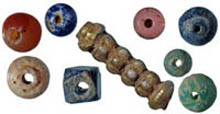
The enormous granaries in Karanis bear witness to the importance of grain in the economy of Roman Egypt, and the many grinding and crushing stones indicate olive oil production on a grand scale. These are products which are also grown by Fayumi farmers of today. The Fayum Project therefore also studies present-day land use and some of the traditional farming methods still in use in the Fayum.
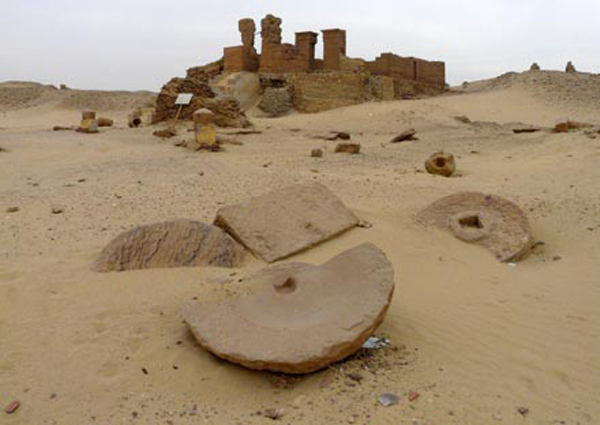
Grinding stones at Karanis
Greco-Roman sites in the research area of the URU Fayum Project, and investigated by the project are: Karanis,
Qaret Rusas, Medinet Watfa, and el-Qarah el-Hamra.
